
The Ultimate Guide to Custom T-Shirt Printing in the UAE
Every era is about something, and it won’t be wrong to say that this age is dedicated to customized t-shirts. Businesses are loving the idea of tailoring them since the popularity is increasing day by day in the UAE. Not just businesses, but they are an ideal choice for events, sports teams, and even personal branding.
Since it’s the new trend that’s taking over, you must catch up to that. The design you choose, the printing techniques you use, or the practices you adopt make all the difference.
You should know that the UAE’s market is pretty competitive, and several other factors control everything. This means having a unique artwork isn’t the answer to standing out. You must take the right decisions at every step.
Consider this guide as your mentor that will guide you on how you make your t-shirt customization journey seamless. But let’s understand the UAE market first so we can make informed decisions.
Understanding the UAE Custom T-Shirt Market
The UAE market is very different from the rest of the world. Being a tourist hub, a highly competitive market, and a nation with a hot climate, this place isn’t easy to tackle. People are aspirational and want their shirts to have embroidered patches, a unique look, and branding. You must consider all these factors before getting into the customization journey.
Moreover, it’s a place where multiple cultures are found. So, you have to think accordingly and create something that doesn’t clash with their habits and norms.
Choosing the Right Fabric for UAE Weather
You win every game when you choose the right fabric. The comfort and durability it brings can be revolutionary for you and your business. That’s why we’re sharing the most preferred fabrics according to the UAE’s weather.
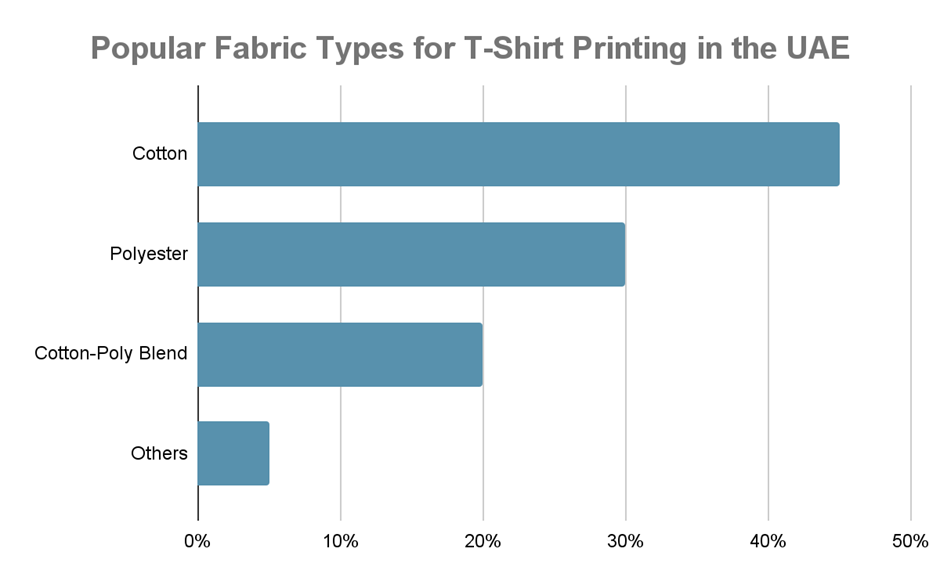
- Cotton: It’s a soft and breathable fabric that is perfect for everyday wear.
- Polyester: Lightweight, quick-drying, and durable are the most common features.
- Cotton-Poly Blends: They resist wrinkles and offer a balance of comfort and strength.
Although these are the preferred options, moisture-wicking and breathable fabrics suit best for hot, humid weather.
Essential Design Tips for Custom T-Shirts
A great design can transform a basic t-shirt into an attractive piece that people love to wear. Whether your goal is branding, promotion, or elevating personal style, these design tips will work wonders for everyone.
- Try to stick with the basic and simple design. Overcrowded or complicated designs can look confusing once printed. Focus on one design element and keep extras to a minimum.
- Choose your colors wisely because they matter. High-contrast colors make your garment stand out, so you can go for it. Avoiding too many hues is always a great idea.
- The message, logo, or text printed must be readable at first glance. Pick simple fonts and an appropriate size that complements your shirt. Don’t forget to give the right spacing.
- The placement of the design determines how your garment turns out. Go for common placements like center front, upper chest, or sleeves. For branding, the chest and back are the best areas.
- Always print your design on a trial piece to ensure the artwork looks similar to what you have in mind. Testing your design before printing in bulk is always encouraged.
- Ensure that your t-shirt themes are aligned with your purpose. The design specifics should differ depending on whether you’re creating it for branding, events, a team, or personal use.
Preparing Your Artwork for Printing
Now that you’ve got some tips on designing, let’s move on to the next step: preparing your artwork. Even the best designs can look ugly if they are not prepared correctly. Follow these basics and ensure your artwork is ready for the print.
- File formats
The most commonly used formats are PNG and PSD since they are widely accepted. Vector formats like AI and PDF are perfect because they can be resized without losing quality.
- Resolution and size requirements
Set your artwork at a minimum of 300 DPI so that the print comes out crisp. Always go for high resolution to avoid pixelation issues.
- Color modes: RGB vs CMYK
Know that screens display colors in RGB, while printers use CMYK. Always convert your design to CMYK before printing to avoid any unexpected color change.
Artwork Preparation Process
Design Created → File Format Check → DPI & Size Check → CMYK Conversion → Proof Approval → Ready for Print
Most Popular T-Shirt Printing Techniques in the UAE
Confused about what method will be right for your project? Walk through the various techniques because each one of them offers different benefits. Have a look at the most common t-shirt printing methods used in the UAE.
- Screen printing
It’s a popular, super budget-friendly option for large orders. The prints it produces are vibrant, highly durable, and great for uniforms, campaigns, and events.
- DTG (Direct-to-Garment)
DTG printing applies ink directly to the fabric using advanced printers. It’s ideal for small to medium orders. Know that it works best on cotton fabrics and provides highly detailed designs.
- Heat transfer
Heat transfer printing transfers the design onto the shirt using heat and pressure. If you want fast turnaround and small batch orders, it’s a perfect choice.
- Sublimation
Sublimation printing uses heat to turn the ink into a gas, which then bonds directly to the polyester fabric. The best part is that it delivers a durable print that doesn’t fade.
- Embroidery
Besides T-shirt printing Abu Dhabi, you can go for embroidery. Technically, it’s not a printing method, but a great alternative to get your design onto the shirt. It offers great durability and a premium finish.
A Quick Overview of Printing Methods
| Printing Techniques | Features |
| Screen Printing | Best for bulk orders |
| Direct-to-Garment | Ideal for detailed designs |
| Heat Transfer | Fast and flexible |
| Sublimation | Perfect for polyester fabrics |
| Embroidery | An alternative option |
Best Practices for High-Quality Results
Even if you use the best designs and printing techniques, the chances of errors are high. Only with proven and best practices can you reduce blunders and guarantee great-looking t-shirts.
- Test with samples
Always request a sample before placing the order, especially if you’re going for a large quantity.
- Color matching and proofing
Review the proofs and compare printed colors to your brand palette to avoid inconvenience.
- Wash test for durability
Go for rigorous washes and check if the t-shirt can pass the test without fading or cracking.
- Work with experienced local printers
Partner with proficient, reliable printers to deliver the best results in terms of quality.
- Double-check file and design details
Confirm if the artwork is shared in the right format, resolution, and color mode. The same goes for margin and design placements.
- Plan for scalability
Ask if they can handle bulk production while maintaining quality in case you scale your order in the future.
Wrap Up
It’s clear that T-shirt printing in the UAE is such a powerful tool for branding, promotion, and personal use. If you choose the right fabric, smart design techniques, and select the best printing method, the result will be long-lasting. Follow the best practices and tips to get a garment that looks attractive and lasts a lifetime!

At CustomPatches.ae , I focus on exploring the art and strategy behind custom patch creation. My goal is to break down the design and production process into clear, and detailed instructions that help brands, teams, and entrepreneurs create patches that truly represent their identity. I provide tips from fabric choices and border styles to modern patch applications and branding techniques, I cover every detail that influences quality and visual impact. Through trend analysis, expert advice, and practical design guidance. I aim to inspire and inform anyone looking to create distinctive custom patches that leave a memorable mark.