
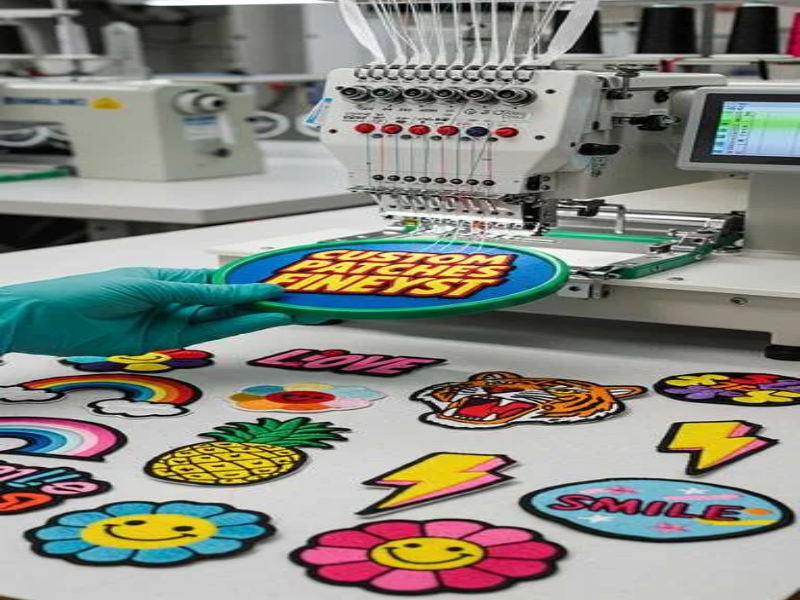
Everything You Need to Know About Custom Patch Production
Custom patches are everywhere. You can find it on bags, jackets, uniforms, or even merchandise. No matter where you look, you will find someone flaunting it. This isn’t just a recent trend that took off but is more of a classic option that revamps and transforms your everyday and professional look.
But when you take a glance at such intricate pieces, you don’t think of the tricky process behind them. It takes days of effort and endless hours of creativity to get a few made. But surely they are worth it.
If you’ve no idea about how every customized patch is made, here’s a detailed blog that covers every bit from the design to delivery. Consider this blog a look into a patch-making process so you can better understand the craft and appreciate it next time you wear or use it.
A Closer Look at the Patch-Making Process
Don’t think of it as a process of making a garment accessory, but it’s truly a journey of creativity and craftsmanship. It’s more about taking your incredible idea and turning it into a stunning crest that looks amazing anywhere it is placed.
When you decide to get the custom patches made in Dubai, there’s a whole process that runs behind it. Here’s our attempt to share that complete process that starts with an idea and ends at your doorstep.
Step 1: Initial Concept & Idea Discussion
Every custom patch starts with an idea. This is the stage where you share your visions and truly understand what you want the outcome to be. An idea doesn’t have to be a proper artwork, but any concept would work. You must know whether you need a logo, symbol, or some sort of text on your emblem. Think of the colors that will flaunt on it.
Later, refine the idea more by deciding the purpose. Is it for branding, your team, merchandise, or for your personal use?
Finally, you must choose the type of patch. By deciding all this, your ideas are ready to be conveyed.
Step 2: Design & Artwork Creation
Once you have a clear concept, it’s time to turn that idea into stunning artwork. Share everything you have in mind with the designer, and they will give your idea a reality with their creativity and skill.
The role of a professional designer is important here because they are the real heroes who take your raw and unconvincing concepts and turn them into an emblem that looks fabulous. They will be responsible for polishing the layout, colors, fonts, icons, and overall outlook so it looks balanced and is ready for production.
Step 3: Digitizing the Design
It’s a technical step that prepares your artwork for production. Since the patches are made by machines, you need a digitized version of the design. Basically, its stitch patterns guide the embroidery machine in direction, density, layering, and more.
For different types of crests, the digitizing must be sorted accordingly so that every weave, mold, and engraving comes out nice.
Step 4: Material Selection
This one’s an important step because it decides how well your emblem will look and feel. Depending on the type of patches you need, the fabric used may include:
- Fabric base and thread for embroidered crest
- PVC layers for flexible patches
- Woven yarn for detailed designs
- Leather sheet for a premium finish
This doesn’t end here. At this stage, you must also decide the type of backing you need. You’ve got a range of options like iron-on, Velcro, sew-on, or adhesive ones. You can choose the one based on how you want your crest to be applied.
Step 5: Production Begins
This is the step where your patch idea turns into a reality. That concept you had in mind will become tangible with the help of skilled workers and state-of-the-art machines.
Depending on the type of patch, the production technique differs. Here’s a quick view of what techniques work for which sort of emblem.
Production Methods at a Glance
| Patch Type | Making Technique | Unique Features |
| Embroidered | Machine Stitching | Textured, Durable |
| PVC | Moulded Layers | Flexible, Waterproof |
| Woven | Tight Weaving | Fine Detail |
| Chenille | Looped Yarn | Raised, Fluffy |
| Leather | Engraving/Debossing | Premium, Stylish |
Step 6: Cutting & Finishing
Now that your crests are manufactured, it’s time to get them shaped and polished. The cutting must be done carefully and precisely to maintain the intricate design. If you’re relying on a reputable uniform manufacturer, there’s nothing to worry about. But if you’re outsourcing it to any small outlet, you may need to supervise it for a finer result.
You can choose whether to go with laser cutting or hot cutting, or add merrowed borders for a cleaner look.
Lastly, the backing is attached to each patch, and it goes directly to quality check to ensure that the highest standards are maintained.
Step 7: Packaging & Delivery
Only when the tailored crest passes the quality check do they move to the packaging department. That’s where it is packed carefully so it reaches the customer without bending or damage. These are packed individually or in bulk, depending on your requirements.
Once packed, they are dispatched immediately to your desired location. Now, they are ready to be flaunted by people via bags, garments, and accessories.
Tips for Customers Ordering Custom Patches
Ordering patches is no rocket science. However, we are sharing some tips to ensure that the journey remains simple for you.
- Keep your design simple if the patch size is small.
- Choose the backing based on the fabric and the crest itself.
- High contrast and vibrant shades work best and come finer.
- Always specify the dimensions, backing, and quantity clearly.
- Review the sample before production to avoid inconvenience.
Wrap Up
It goes without saying that patch making is surely a complex process that requires creativity, expert craftsmanship, and a solid manufacturer by your side. Every step is designed precisely to ensure your expectations are met and your vision comes to life.
Now that you have an idea of what the journey holds, you will make an informed decision next time you want to spend on customized patches.

At CustomPatches.ae , I focus on exploring the art and strategy behind custom patch creation. My goal is to break down the design and production process into clear, and detailed instructions that help brands, teams, and entrepreneurs create patches that truly represent their identity. I provide tips from fabric choices and border styles to modern patch applications and branding techniques, I cover every detail that influences quality and visual impact. Through trend analysis, expert advice, and practical design guidance. I aim to inspire and inform anyone looking to create distinctive custom patches that leave a memorable mark.